
Child Tooth Abscess: Warning Signs and Emergency Dental Care
Child Tooth Abscess: Warning Signs and Emergency Dental Care
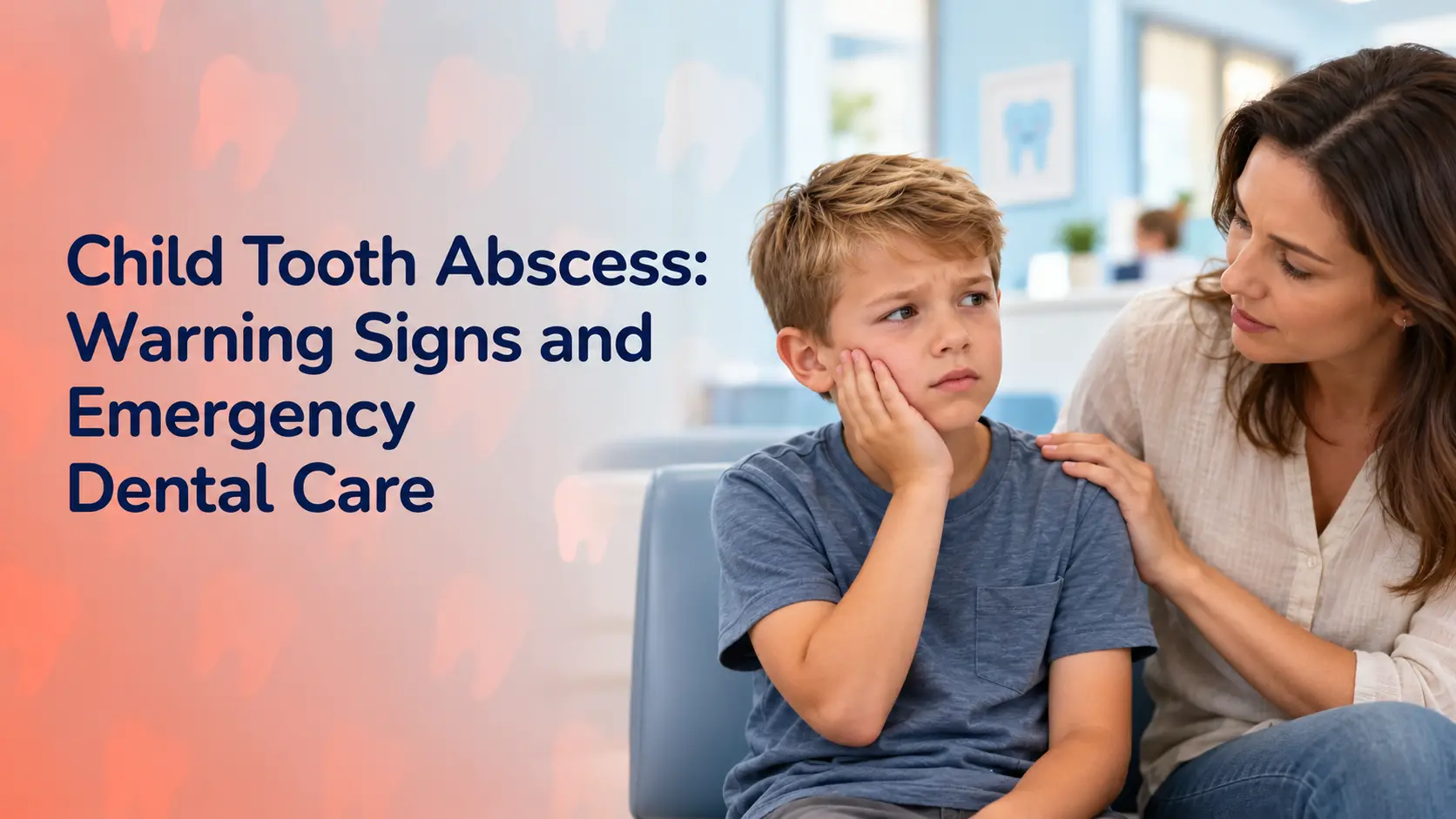
A child tooth abscess may first look like a pimple on the gum, a swollen cheek, or a tooth that hurts when your child eats. Sometimes there is little pain. Even if the bump drains or pain fades, the tooth still needs dental attention. Rapid facial or neck swelling or trouble breathing or swallowing needs emergency medical care.
What Does a Child Tooth Abscess Look Like?
A tooth abscess is an infection around a tooth or gum. In children, swelling near one tooth may appear before severe pain.
A Pimple or Gum Boil Near the Tooth
A gum boil on a child’s tooth may look like a red, white, or yellow pimple. It can feel tender, release fluid, or leave a bad taste. The bump may shrink after draining, but the problem can remain. Do not squeeze it. Arrange a dental visit instead.
Other Signs of a Tooth Infection in a Child
A tooth infection in a child may cause pain when chewing, swollen gums, bad breath, fever, cheek swelling, or a darker tooth after an injury. Younger children may chew on one side, avoid hard foods, wake at night, or touch their cheek.
Can an Abscessed Baby Tooth Stop Hurting?
Yes. An abscessed baby tooth can hurt less after a gum bump drains because pressure has been released. That does not mean the tooth has healed, and the bump can return.
A dentist should decide whether the baby tooth can be treated or needs removal. A visible bump disappearing is not a reason to skip the dental visit.
When Is a Child Tooth Abscess an Emergency?
A suspected abscess needs prompt dental attention. The American Academy of Pediatric Dentistry guidance on dental emergencies includes infection, facial swelling, and dental pain among dental emergencies.
Call a Dentist Promptly If You Notice
Call when your child has a gum boil, ongoing tooth pain, drainage, pain while chewing, localized swelling, or a tooth that darkened after an injury. Urgent dental care for children can help identify the cause. Dr. Phan can examine the tooth and explain how quickly treatment is needed.
Seek Emergency Medical Care for Serious Warning Signs
Seek emergency medical care if swelling spreads quickly across the face or neck, moves toward the eye, or your child has trouble breathing or swallowing or appears seriously ill. These signs need immediate attention.
Protect Your Child’s Smile From Tooth Infections
What Causes a Tooth Abscess in Children?
A Cavity That Became Too Deep
An untreated cavity can grow deeper until bacteria reach the inside of the tooth. Pain, swelling, or a gum bump may follow. Treating cavities early can stop a smaller problem from becoming urgent.
A Cracked, Broken, or Injured Tooth
A fall or hard bump can damage a tooth even if it does not break. A tooth may look normal at first, then darken or develop swelling weeks or months later. New changes after an injury should be checked.
What Should Parents Do Before the Dental Visit?
Call the dental office and describe swelling, fever, drainage, pain, and any recent injury. Offer soft foods if chewing hurts, keep the area gently clean, and use a cold compress outside the cheek for swelling.
Do not pop the gum boil, place medicine directly on the gum, use leftover antibiotics, or assume drainage means the infection is gone.
When needed, digital dental X-rays for children can show areas that are not visible during a regular exam. Dr. Phan can use those findings to explain the treatment choices to parents.
How Do Dentists Treat an Abscessed Baby Tooth?
Treatment depends on the tooth, the amount of damage, and whether it can safely be saved. The dentist may examine the area and take an X-ray.
If the baby tooth can remain, treatment to save an infected baby tooth may be considered to clean infection from inside it. If the tooth is too damaged, gentle removal of a damaged baby tooth may be recommended.
Antibiotics may be used when infection is spreading, but medicine alone does not repair the problem tooth. A pediatric dental abscess therefore needs an individual treatment decision.
Can a Baby Tooth Abscess Affect Adult Teeth?
A baby tooth should not be ignored because it will eventually fall out. Infection around it can affect nearby tissues, and the developing adult tooth may be close to the area. Early care helps the dentist protect the surrounding area and choose whether saving or removing the tooth is best.
How Can You Prevent Another Tooth Infection?
Help your child brush twice daily, clean between teeth that touch, limit frequent sugary snacks and drinks, and keep regular dental visits. Preventive care for children’s teeth helps find small cavities and damaged teeth earlier.
After an abscess, ask what caused it so you can reduce the chance of another infection.
Why Choose Adorable Smiles Pediatric Dentistry?
Adorable Smiles Pediatric Dentistry helps families address tooth pain, swelling, and suspected infections with child-focused dental care. Dr. Phan guides parents through what may be causing the problem, what needs attention now, and which treatment options fit the tooth, helping children receive appropriate care while parents understand each next step.
Frequently Asked Questions (FAQs)
Can a Child Tooth Abscess Go Away on Its Own?
No. A child tooth abscess may look smaller after it drains, and pain may temporarily improve, but the source of the infection can remain. A dentist should examine the tooth and decide what treatment is needed to prevent the problem from returning.
Should I Pop a Gum Boil on My Child’s Tooth?
No. Do not squeeze or pop a gum boil on your child’s tooth. It may drain on its own, but pressing it can irritate the area and does not fix the infected tooth. Keep the area clean and contact a pediatric dentist for an examination.
Can an Abscessed Baby Tooth Have No Pain?
Yes. An abscessed baby tooth can sometimes cause little or no pain, especially after a gum bump drains. Watch for swelling, a pimple-like bump, bad taste, or tooth color changes, and have the tooth checked even if your child seems comfortable.
Are Antibiotics Enough for a Child’s Tooth Infection?
Usually, antibiotics alone do not fix the tooth causing the infection. They may be prescribed when swelling or infection is spreading, but the tooth still needs dental care. The dentist will decide whether it can be treated or should be removed.
Does an Abscessed Baby Tooth Always Need to Be Removed?
Not always. The choice depends on the tooth, the amount of damage, the child’s age, and how soon the adult tooth is expected. Some teeth may be treated and kept, while badly damaged teeth may need removal after a dentist examines them.
- Dr. Dean Phan