
Pulpotomy vs Pulpectomy: Which Baby Tooth Treatment Is Best?
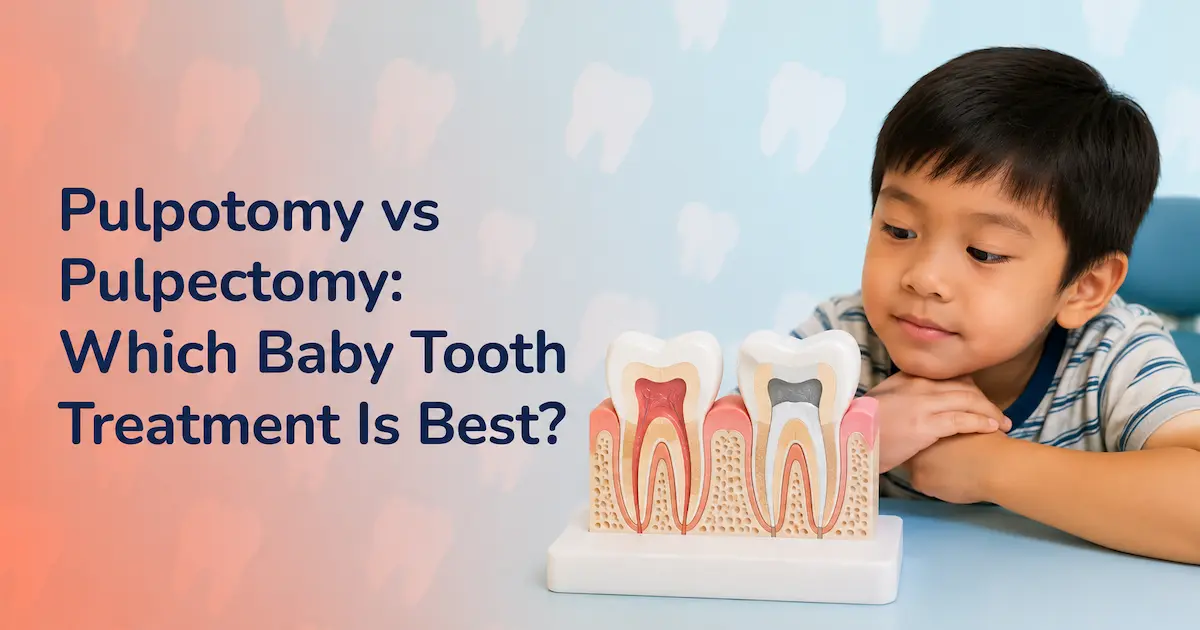
When a deep cavity reaches the inside of a baby tooth, parents may hear two unfamiliar names: pulpotomy and pulpectomy. Both can help save a tooth, but they treat different amounts of the inside.
The easiest way to understand pulpotomy vs pulpectomy is this: a pulpotomy treats only the damaged tissue in the upper part of the tooth, while a pulpectomy cleans the full inner space, including the roots. Neither is automatically better. The right choice depends on how far the damage has reached and whether the tooth can still be repaired.
Pulpotomy vs Pulpectomy: Main Difference
Both treatments aim to keep a damaged baby tooth in place when saving it makes sense. The main difference is how much of the inside needs treatment.
| Question | Pulpotomy | Pulpectomy |
|---|---|---|
| How much is treated? | Part of the inside | The full inner space |
| Are the roots cleaned? | Usually no | Yes |
| When may it be used? | Damage is more limited | Damage has reached deeper |
| Main goal | Save the baby tooth | Save the baby tooth |
For a pulpotomy vs pulpectomy child decision, the dentist considers symptoms, the condition of the tooth, and X-rays rather than pain alone.
Pulpotomy for a Child’s Tooth
A pulpotomy may be considered when a deep cavity reaches the soft center of a baby tooth, but healthy tissue can still remain deeper inside. The damaged tissue in the upper part is removed, the remaining area is protected, and the tooth is repaired.
Parents can learn more about pulp therapy for children. The goal is to keep the tooth healthy without doing more treatment than needed.
Pulpectomy for a Baby Tooth
A pulpectomy treats more of the tooth. The dentist cleans the damaged tissue from the top and the root spaces, fills those spaces with material made for baby teeth, and restores the tooth.
A pulpectomy baby tooth treatment may be considered when the problem has spread too far for healthy tissue to remain.
Choosing Pulpotomy or Pulpectomy
The dentist does not choose between these treatments from one symptom.
How Much of the Tooth Is Affected?
If healthy tissue can remain deeper inside, a pulpotomy may be enough. If the problem extends through the full inner space, a pulpectomy may be considered.
What Does the Exam or X-Ray Show?
The exam shows how much tooth remains, while X-rays for children’s teeth can reveal changes that cannot be seen from the surface.
The American Academy of Pediatric Dentistry guidance explains that the condition inside the tooth and exam and X-ray findings help guide treatment. Dr. Phan can show parents those findings and explain why one option fits the tooth better.
Can the Baby Tooth Still Be Saved?
The dentist also considers whether enough tooth remains to repair, how soon it may fall out naturally, and whether another treatment makes more sense. This is why there is no single winner in pulpotomy vs pulpectomy.
Choose The Right Treatment
Signs a Baby Tooth Needs Care
A child may have pain while eating, sensitivity, a sore gum, swelling, a bump near the tooth, a darkened tooth, or a large visible cavity.
These signs cannot tell parents which treatment is needed. Dr. Phan helps families connect the symptoms with what is found during the exam instead of guessing from pain alone. If swelling or strong pain develops quickly, prompt dental care is important.
Baby Root Canal Types Explained
“Baby root canal” is an informal phrase that can mean different things. Some offices use it for a pulpotomy, others for a pulpectomy, and some use it for both. This terminology is also a common source of confusion for parents discussing treatment options.
When comparing baby root canal types, ask exactly what part of the tooth will be treated. A pulpotomy treats the upper portion. A pulpectomy cleans the full inner space, including the roots.
Saving or Pulling a Baby Tooth?
Parents often wonder why a baby tooth should be treated if it will eventually fall out. Keeping baby teeth when appropriate can help preserve space for the permanent teeth developing underneath. Early loss can sometimes affect the space available for the next tooth.
Saving the tooth is not always the right choice. If too little healthy tooth remains or the tooth is close to falling out naturally, removing a badly damaged baby tooth may be discussed. Treatment versus extraction is also a common concern when parents are presented with a baby root canal.
After Pulpotomy or Pulpectomy
Your child’s mouth may remain numb briefly, so follow eating instructions and help prevent cheek or lip biting.
A treated back tooth may need extra protection, especially when a large cavity has weakened it. In that case, a protective crown for a child’s tooth may be recommended. Contact the dental office if pain worsens, swelling appears, or new symptoms develop after treatment.
Questions Before Baby Tooth Treatment
Ask why one treatment is recommended, whether the tooth can still be saved, whether a crown will be needed, what could happen if treatment is delayed, and whether removal is another reasonable option.
Dr. Phan can use the exam and X-ray findings to explain these choices in plain language. The key point is simple: pulpotomy treats a smaller part of the inside, while pulpectomy treats the full inside. The best choice is the one that matches the condition of your child’s tooth.
Why Choose Adorable Smiles Pediatric Dentistry?
Adorable Smiles Pediatric Dentistry helps parents understand why a baby tooth needs treatment and what each option means. Dr. Phan explains findings in simple language, answers questions about comfort and restoration, and helps families understand the next step based on the child’s tooth, symptoms, and X-ray findings before treatment begins.
Frequently Asked Questions (FAQs)
Which Is Better, Pulpotomy or Pulpectomy?
Neither is always better. A pulpotomy may fit when healthy tissue can remain inside the baby tooth, while a pulpectomy treats the full inner space. The dentist decides after examining the tooth and X-rays.
Is a Pulpotomy the Same as a Baby Root Canal?
A pulpotomy is often called a baby root canal, but the phrase can also describe a pulpectomy. The key difference is how much of the inside of the tooth needs treatment before the baby tooth can be restored.
Does a Pulpectomy Save a Baby Tooth?
Yes. A pulpectomy is designed to keep a baby tooth when the problem has reached deeper inside but the tooth can still be repaired. The cleaned inner space is filled, and the tooth is restored for continued use.
Does Every Deep Cavity Need a Pulpotomy?
No. A deep cavity does not automatically mean a pulpotomy. The dentist checks symptoms, the tooth itself, and X-rays to see how close the damage is to the center and whether a less involved repair may still work.
Will My Child Need a Crown After Treatment?
Often, especially for back baby teeth that have lost a lot of tooth structure. A crown covers and protects the repaired tooth so it can handle chewing. The dentist will explain whether your child’s tooth needs one.